
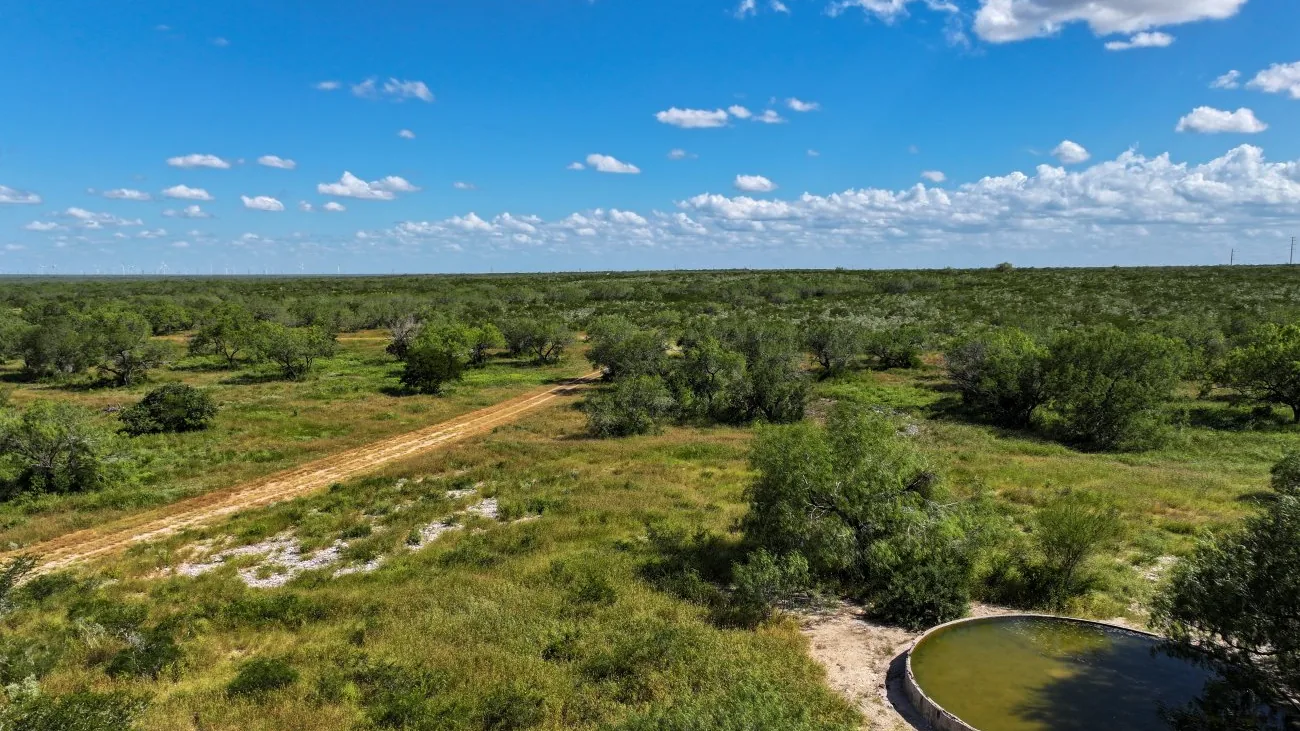
How Do You Get Rid of Mesquite Trees in South Texas?
A mesquite tree dies only when its bud zone dies. That zone is a short section of buried stem packed with dormant buds. A U.S. Forest Service review of the research puts most of them 2 to 6 inches underground. On older trees they can sit as deep as 12 inches.
Cut, shred, mulch or burn the top, and those buds push up new stems. Root plowing and grubbing reach the bud zone, and so do some herbicide treatments. Those are the methods that can kill the tree.
When Iron Steer Land Services clears mesquite around Laredo, the mulching head takes the brush down first. Then the rippers on the skid steer root plow the lanes and flats that must stay open. The same two steps run through our brush clearing across the brush country.
Why does mesquite come back after you cut it?
Mesquite keeps its comeback underground. A Forest Service review lists what can take the top: freezing, drought, fire, cutting or herbicide. Once the top is gone, dormant buds on the buried stem start new growth. That is why a cut mesquite so often returns as a bush with many stems.
The Texas Parks and Wildlife Department (TPWD) calls that buried stem the crown in its South Texas Plains guidelines. Texas range researchers report that top-killing treatments turned many stands of few-stemmed trees into thickets of many-stemmed sprouts.
Seed is the second way mesquite returns. Cattle and wildlife eat the sweet pods and drop the seed in their dung. In South Texas, one study found mesquite seedlings in 75 percent of cattle dung piles checked in September. TPWD adds that seed can lie dormant and sprout when conditions are right or the ground is disturbed.
What methods do landowners use to get rid of mesquite?
Every method lands on one side of a line. It removes the top, or it kills the bud zone.
| Method | What it does | What comes back | Done by |
|---|---|---|---|
| Forestry mulching | Grinds brush and small trees to grade | Mesquite sprouts again from the bud zone | Us, with the mulching head on the skid steer |
| Root plowing | Cuts the roots below the bud zone | Most old trees die; seedlings, whitebrush and prickly pear can return | Us, with the rippers on the skid steer |
| Grubbing | Lifts each tree’s crown out below the bud zone | Sprouts if part of the bud zone stays | A grubbing blade or hand tools |
| Herbicide | Leaf or stem spray carries the chemical into the plant | About 7 of 10 sprayed trees die, per the extension sheet | The landowner or another provider, by the label |
| Prescribed fire | Burns off the top growth | Adult trees sprout again; young seedlings can die | Not our work: a trained burn crew with a plan |
Grubbing works one tree at a time. Texas A and M research calls for cutting a mesquite taproot 6 to 14 inches down. Bigger trees need the deeper cut. The state extension service warns that any part of the bud zone left behind can resprout.
Good soil moisture lets the crown come out more completely. Hand grubbing kills mesquite under 1 inch across when the root is cut 4 inches down.
What does the extension service say about regrowth?
Texas A and M AgriLife Extension publishes a Brush Busters sheet on mesquite. It warns that controlling mesquite is not a one-time job, since livestock and wildlife keep spreading the seed.
Top removal alone does not hold mesquite back. Texas A and M research found regrowth is extensive after shredding. TPWD does not recommend shredding or other top-only work for mesquite, since it may cause more sprouting.
Root plowing scores better, with limits. The Forest Service review says root plows and grubbing blades often give over 90 percent control. Yet the same review notes that cleared land generally came back with seedlings or sprouts.
On the Welder Wildlife Refuge in South Texas, huisache, mesquite and prickly pear increased on root plowed ground. Grass recovered slower there. TPWD sums it up: without follow-up treatment or good grazing management, cleared sites in time turn back into dense regrowth.
When should you mulch, and when should you root plow?
Mulch when the goal is open ground now with the soil left in place. The mulching head grinds mesquite and prickly pear into mulch that stays on the ground. That mulch shields bare ground and slows runoff while grass comes back.
Trees you mark stay standing, so mulching suits homesites and selective work around mottes. Root plowing turns the soil; mulching works on top of it.
Mulched mesquite will sprout again, so plan a second mulching pass or a spray by others. Mesquite cut back in the dry part of the growing season can resprout slowly, the Forest Service notes. Sometimes the delay runs 3 to 5 years.
Cedar (Ashe juniper) does not sprout from its roots, so a cedar mulched to the ground stays dead. That is why forestry mulching alone works on cedar toward Uvalde, while mesquite needs a plan for its bud zone.
Root plow when a lane or a field has to stay open. It kills most of the old trees at the root. On hunting ranches, it is part of cutting and keeping senderos. Before any root plowing, an 811 request gets buried pipelines and utility lines marked.
Root plowing costs you grass for a while. The Texas A and M review says it kills a high share of the existing grass. Reseeding is advisable unless the soil holds good seed, and winter or early spring seeding does best.
Spring rain decides much of the result. Around Laredo, a normal year brings about 20 inches of rain, with May and September the wettest months. The Natural Resources Conservation Service (NRCS) can help plan the seed mix.
Where do spraying and burning fit?
Herbicide treatments and prescribed burning are tools we leave to the landowner or another provider. TPWD advises getting product advice from the extension service, NRCS or its own staff, and it favors spot spraying.
The Brush Busters sheet gives a stem spray for young, smooth-barked trees and a leaf spray for bushy mesquite. It says to wait two full growing seasons after any top-kill, mulching included, before the leaf spray.
Fire mostly top-kills adult mesquite. Its buds sit underground, where the soil shields them from the heat of most fires. After one late summer fire in South Texas, 72 percent of honey mesquite was top-killed and 10 percent died.
TPWD notes that fire carries legal limits and liability, and the person running it should be well trained. Before any burning, check the county’s burn ban order and the Texas A and M Forest Service burn ban map.
How do you plan a mesquite job on your land?
Start with what stays. Mark the mottes, shade trees, fence and stands you want kept, and the lanes or flats that must stay open.
Then we look at the land or your photos and put the quote in writing. The price depends on the acres, how thick the brush is, what has to stay, trailer access and the drive. Market numbers are in our guide to forestry mulching cost per acre in Texas.
Read how we clear mesquite and brush on ranches and acreage. Call or text (956) 206-3992 about the mesquite on your land.