
Forestry Mulching
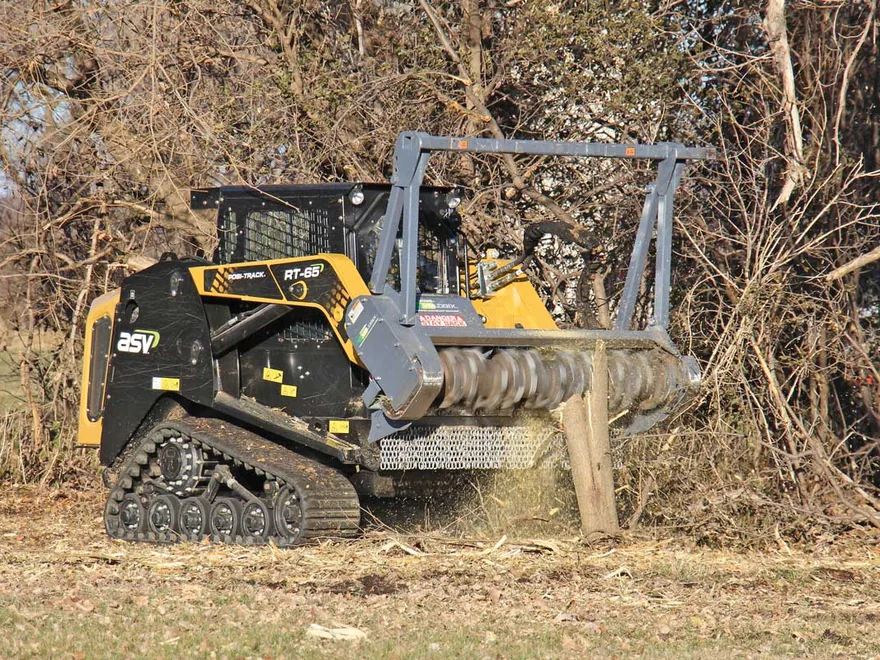
The mulching head on our skid steer grinds brush and small trees into mulch that stays on the ground. The oaks and mottes you mark stay standing.
Learn More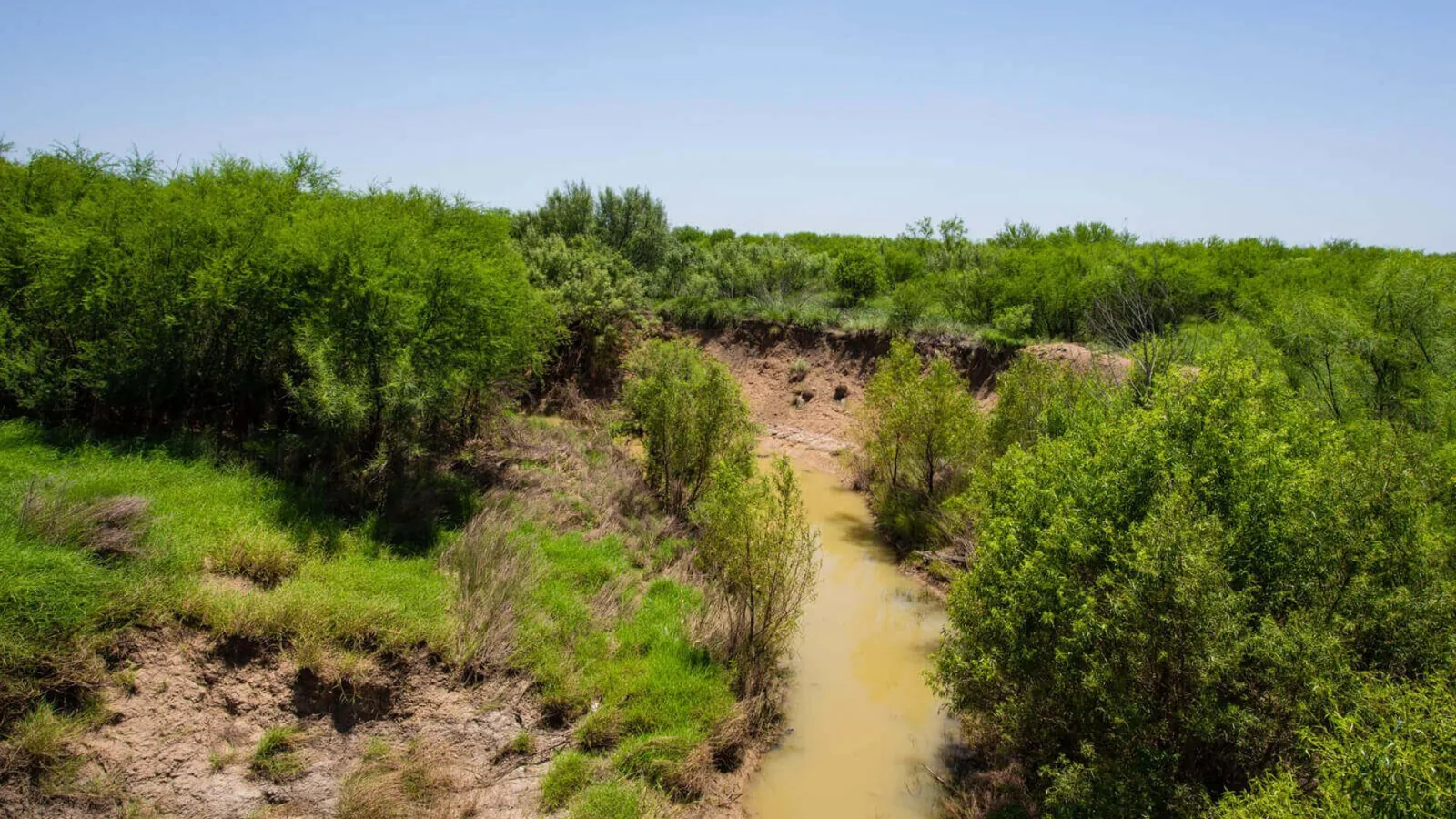
Ranch land around Cotulla is brush country, and the brush keeps coming back. Mesquite and blackbrush crowd the pastures off I-35, and prickly pear spreads over open ground. A sendero left alone closes in, and a fence line can vanish behind the regrowth.
Iron Steer Land Services clears land with a skid steer and its mulching head, trencher, auger and rippers. Cotulla is part of our service area, about 68 road miles up I-35 from Laredo. Here we grind brush with forestry mulching and root plow the lanes that must stay open. Call or text (956) 206-3992 and tell us about the land.
Tell us about the land and the work it needs. We look at the land or your photos of it, then put the quote in writing.
Cotulla is the seat of La Salle County, and its economy grew up on sheep and cattle ranching. The Handbook of Texas describes the county as flat to rolling ground under mesquite, scrub brush, cacti and grasses. Even the museum in the center of town is the Brush Country Museum.
On Maverick clay, the county's largest soil unit, the NRCS lists scrubby mesquite and blackbrush first among woody plants. Whitebrush joins them on the Brundage soils along drainageways. On flood plain clay like Cochina, the NRCS describes large mesquite, with oak and elm along stream banks.
Brush clearing with the mulching head grinds that growth where it stands and leaves the mulch on the ground. You say what stays and what goes. Where a lane or a flat has to stay open, the rippers root plow it to set back the regrowth.
One of the most common soils in La Salle County carries the town's name. The NRCS maps about 84,000 acres of Cotulla clay, a very deep clay that water moves through very slowly. Maverick clay formed from weathered mudstone, and sandy loams like Duval and Webb cover other tracts.
Most of the county drains to the Nueces River, and the northeast quarter drains to the Frio. The Nueces runs along the south side of Cotulla, where the USGS keeps a stream gauge. NRCS maps clays such as Cochina and Coquat on the flood plains, and rates some of them frequently flooded. La Salle County lists a 2008 flood damage prevention ordinance, so ask the county about work on low ground.
The weather station at the Cotulla-La Salle County Airport averages about 22 inches of rain a year. May and September are the wettest months. The station also averages about 62 days a year at 100 degrees or more. Town water comes from the Carrizo-Wilcox Aquifer, per the city's water quality report.
Oil turned up around Cotulla in the early 1950s, the Handbook of Texas notes. Today the Railroad Commission of Texas lists La Salle County among the Eagle Ford Shale counties.
TPWD's Chaparral Wildlife Management Area covers 15,200 acres of brush west of Artesia Wells. TPWD reports oil and gas well sites on it, plus many seismic and pipeline rights of way. La Salle County posts its own pipeline permit process, with a form for lines bored under county roads.
Right of way clearing keeps an easement open with the mulching head, and the mulch stays on the ground. For a smaller operator or the overflow a big crew leaves, our skid steer is one more machine. We also clear the brush around a pad or a tank battery.
Cotulla had 3,718 people at the 2020 Census. Census survey figures show about one in four of its homes is a mobile home. We clear brush off a lot or a homesite before a home goes in. Pad work and grading belong to a builder or an excavation contractor.
Inside the city limits, the City of Cotulla's Permit Department answers permit questions. Outside town, La Salle County posts a driveway permit for access onto county roads, plus cattleguard rules. Driveway applications start at the County Clerk's office. We point you to the right office before work starts.
For a wildlife valuation, the La Salle County appraisal district in Cotulla takes the application and the management plan. At the Chaparral WMA, TPWD studies how plants respond to habitat treatments and shares the results with private landowners. When a plan calls for habitat work, brush management for a wildlife valuation is the machine side of it.
Communities and areas we serve around Cotulla: Encinal, Artesia Wells, Millett, Fowlerton, Gardendale, Nueces River bottoms, Frio River bottoms, I-35 north toward Dilley, State Highway 97 east, FM 468 northwest of town, FM 133 toward Catarina, FM 624 and FM 469.
Cotulla ZIP codes served: 78014.
Cotulla is part of our service area. We look at the land first, then put the quote in writing.
(956) 206-3992 The mulching head on our skid steer grinds brush and small trees into mulch that stays on the ground. The oaks and mottes you mark stay standing.
Learn More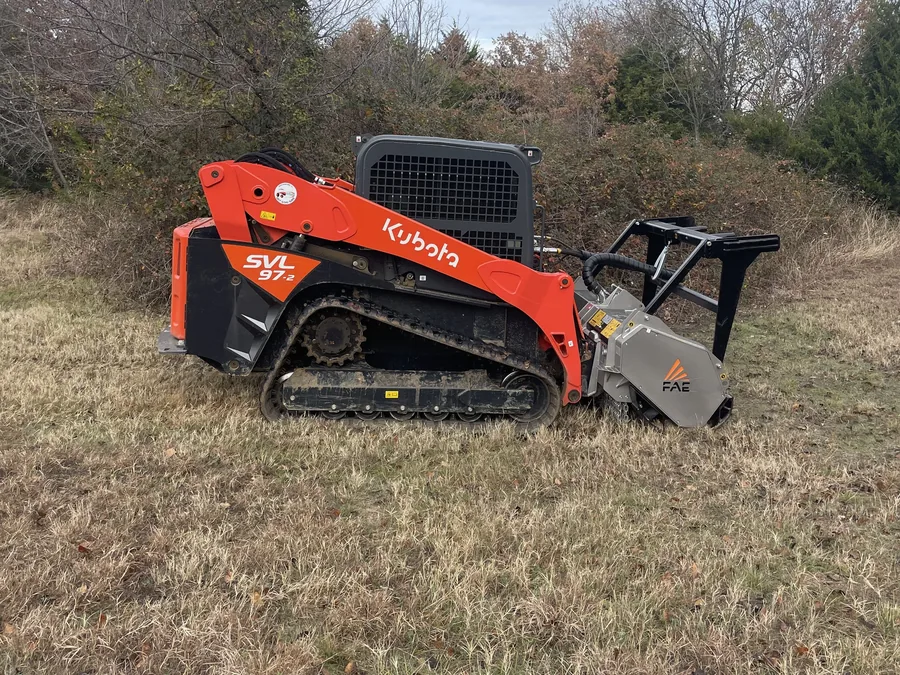
We clear mesquite, huisache, blackbrush and prickly pear from overgrown pasture and lots. The mulching head grinds the brush where it stands, and the rippers root plow what must stay open.
Learn More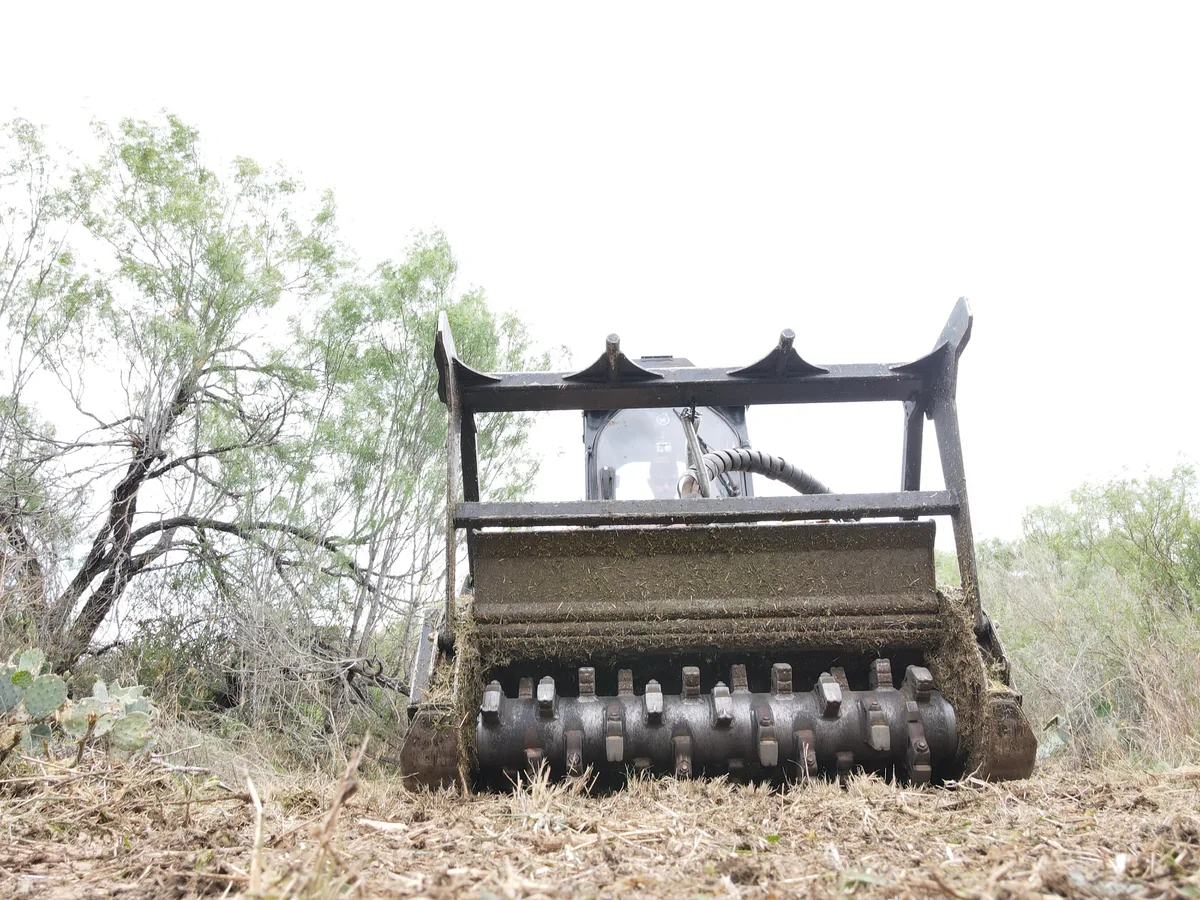
We cut new senderos and re-open old ones on hunting ranches around Laredo. The mulching head clears the lane, and the rippers root plow it where it needs to stay open.
Learn More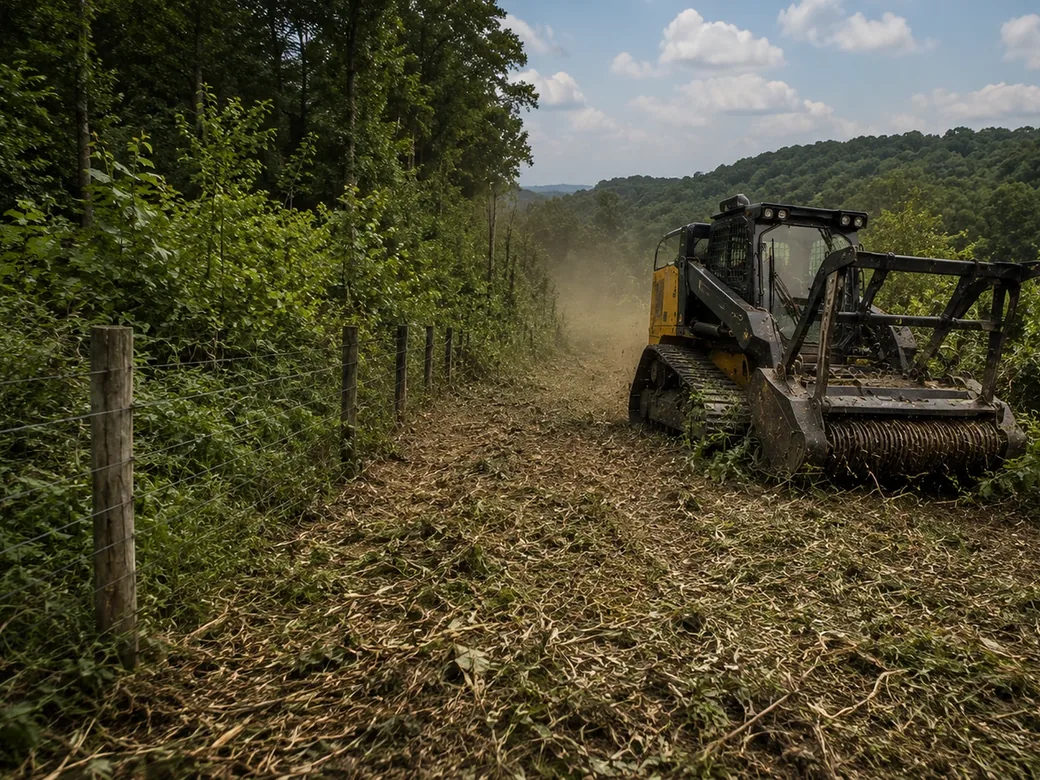
We clear mesquite and brush off old fence lines and cut the path for new ones. New lines get root plowed before the fence crew comes.
Learn More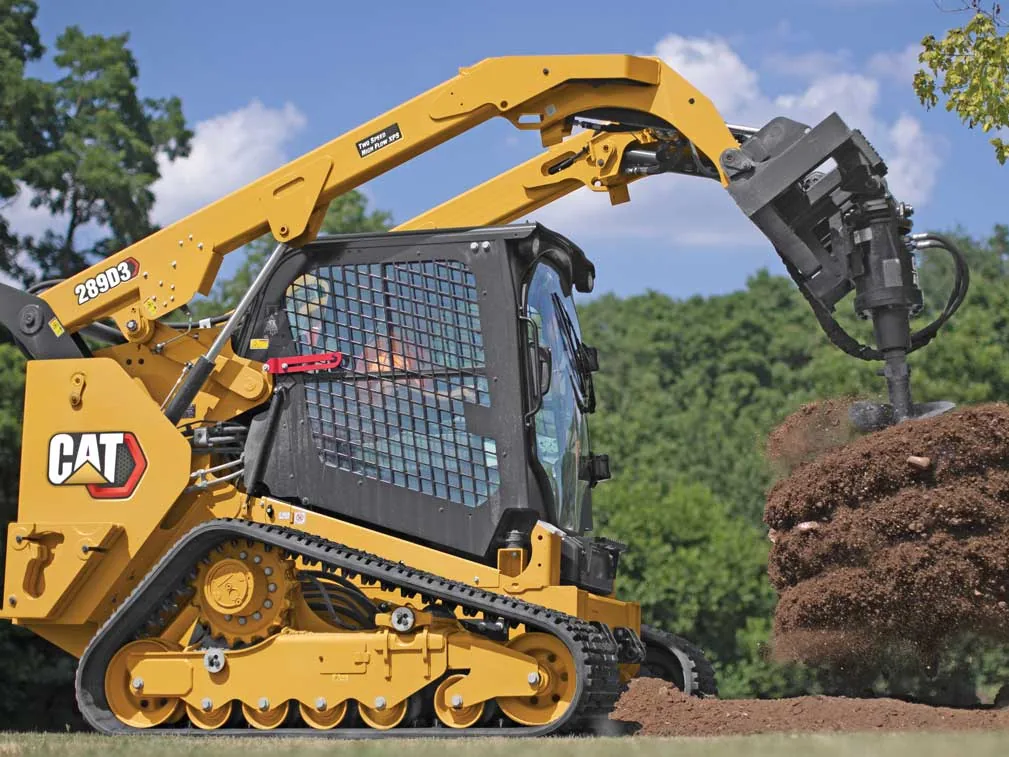
The auger on our skid steer drills fence post holes for ranch fences, game fences, pens and gates. Your fence builder gives the spacing and depth, and we drill to it.
Learn More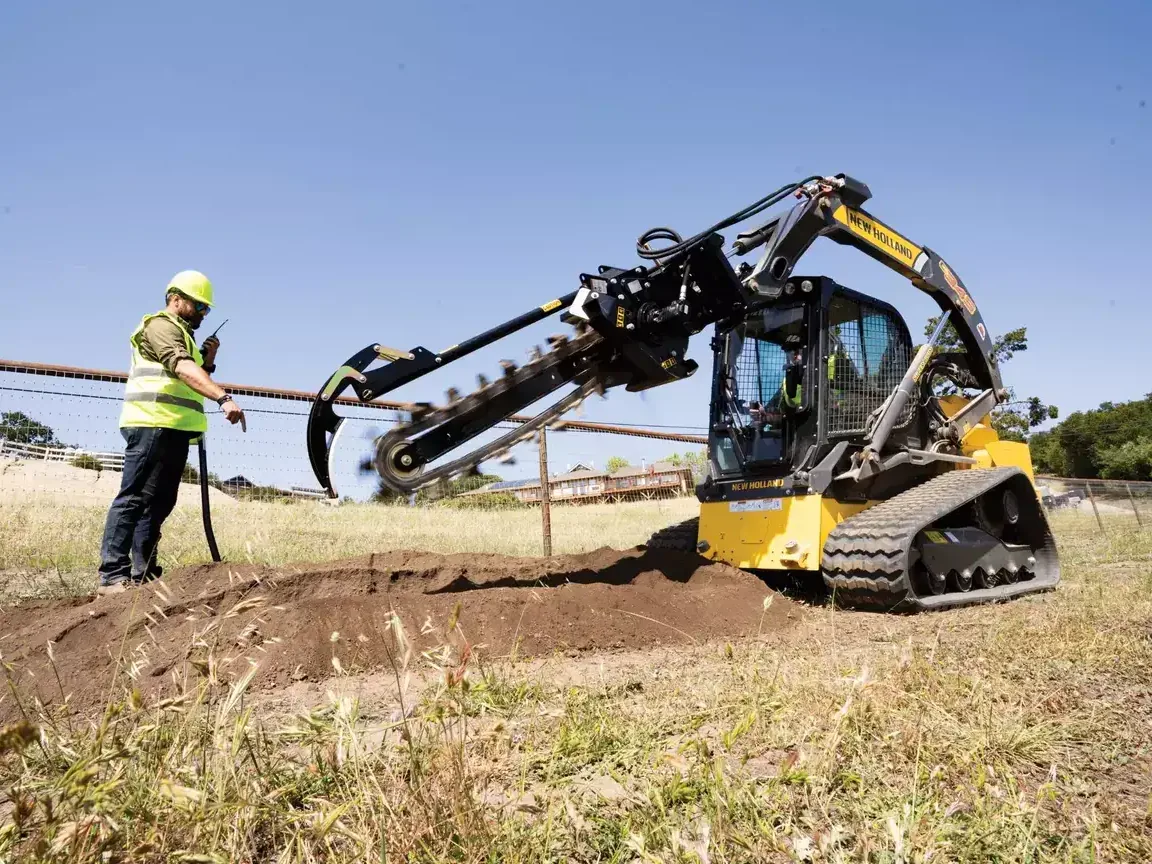
The trencher on the skid steer cuts trenches for water lines and electric runs on ranches and rural land. Your plumber or electrician marks the route and the depth, and we cut to match.
Learn More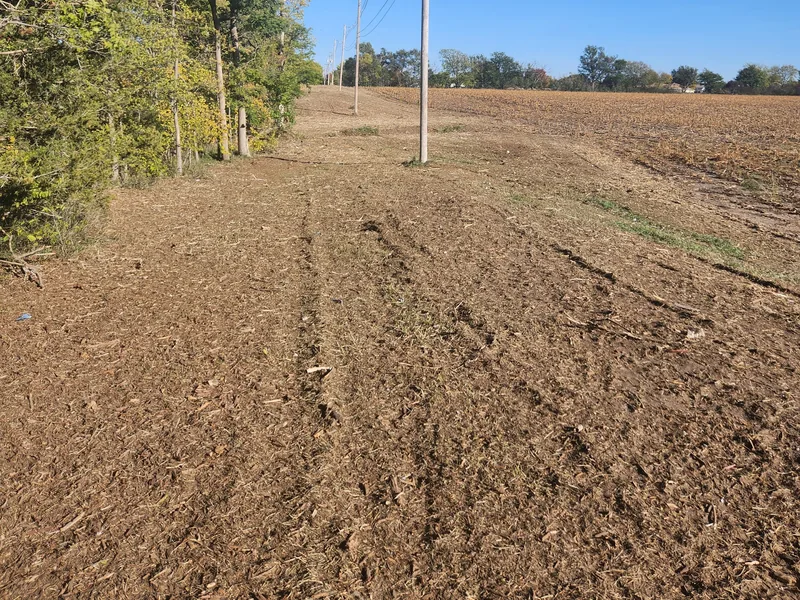
We clear and mulch brush along pipeline rights of way and around pads in the Eagle Ford. A smaller operator or a big crew with overflow work gets an extra machine.
Learn More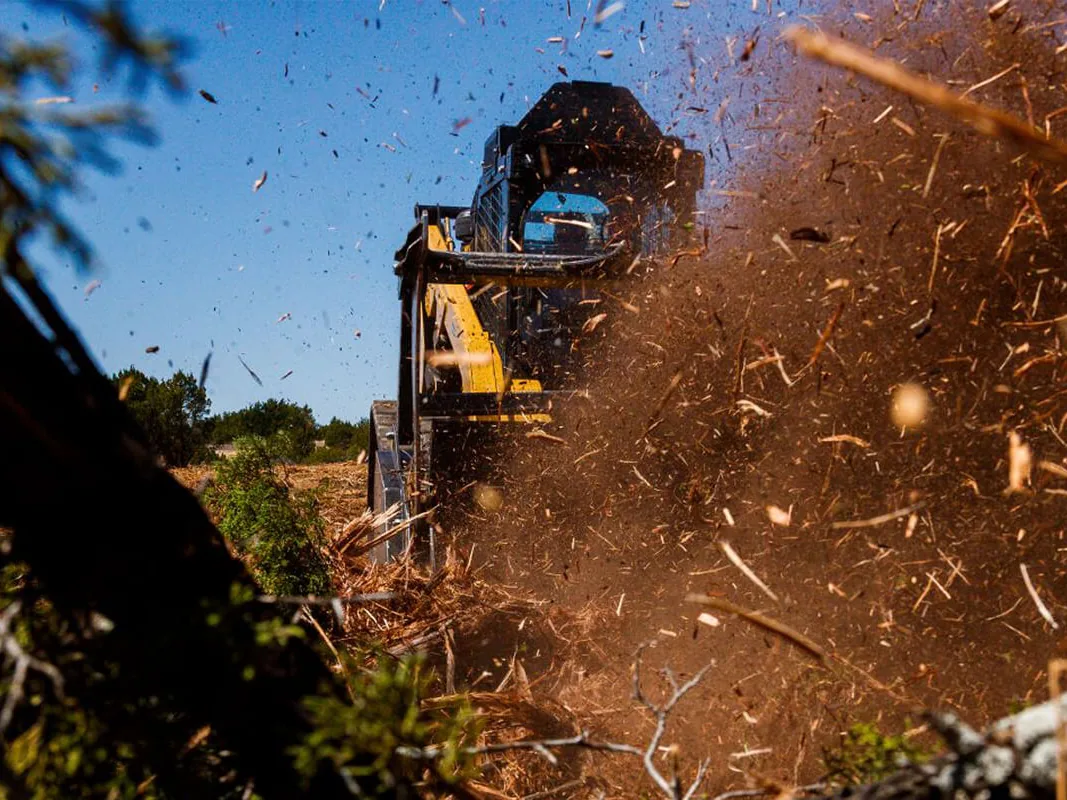
The mulching head and rippers on our skid steer do the brush work a Texas wildlife management plan calls for. You write the plan, alone or with a biologist, and we clear to the acres and pattern it lists.
Learn MoreA few of the questions we hear most around Cotulla. If yours is not here, call or text and ask.
Tell us where the property is and the work it needs, and send photos if you have them. Call or text (956) 206-3992 or use the form, and we will get back to you.
Tell us about the land and the work it needs. We look at the land or your photos of it, then put the quote in writing.