
What Is a Sendero, and How Do You Cut One and Keep It Open?
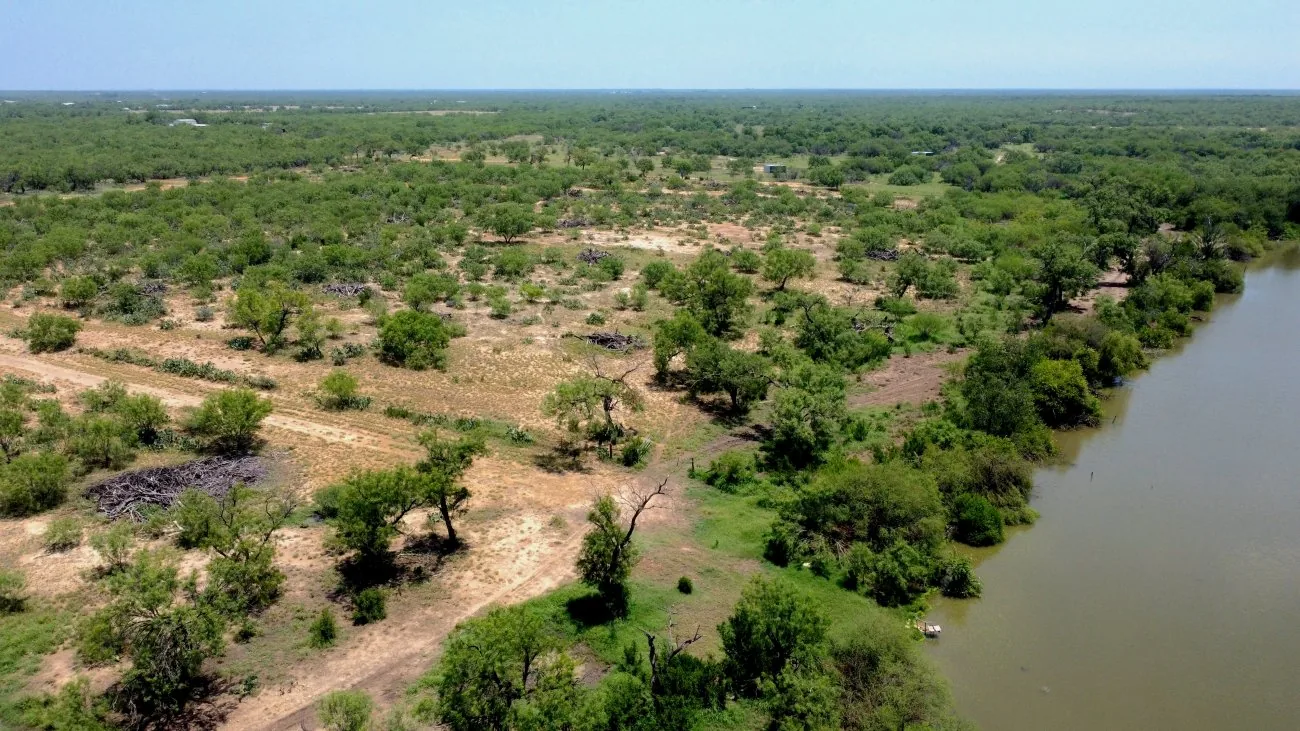
A sendero is a long lane cleared through the brush on a South Texas ranch. Hunters set feeders and blinds along it, and the ranch truck uses it to reach them. To make one, cut the lane with a mulching head and root plow it where regrowth has to stop. After that, a mulching pass each year keeps it open.
There is no single standard width for a sendero. The Texas Parks and Wildlife Department (TPWD) gives numbers for the brush you leave instead. Its South Texas guidelines favor about as much brush as open ground for deer. Iron Steer Land Services does sendero clearing for ranches around Laredo and across the South Texas brush country.
What is a sendero on a South Texas ranch?
Sendero is Spanish for a path. On a ranch, it is a cleared lane through the brush, often long and straight. A deer that steps into the lane is out in the open, where a hunter can see it.
Around Laredo, the brush runs to mesquite, blackbrush, guajillo, huisache and prickly pear. Natural Resources Conservation Service (NRCS) soil descriptions name blackbrush and guajillo as dominant brush on some Webb County uplands. Left alone, that brush grows back into a lane.
How wide should senderos be, and how should they run?
The width follows the lane’s job. A blind needs a long view, and a feeder path only needs room for a truck. You mark the width, and we cut to it.
TPWD adds a winter test for the brush that stays. A strip of brush should be too thick to see through when the leaves are off. Keep the strips continuous where you can, so deer can travel inside them.
An older TPWD brush guide gives strip numbers for flat South Texas ground. Its 1 to 1 example clears 300 feet and leaves 300 feet of brush. Long cleared strips get a belt or block of brush every 200 to 300 yards. It also says to leave brush along the draws, and it calls an irregular pattern more desirable than straight strips.
Those figures are for clearing strips across a pasture, not for one hunting lane. A later brush guide that TPWD published jointly with Texas A and M University-Kingsville adds one more number. Deer feel secure when they are always within 75 yards of hiding cover.
How do you cut a sendero through mesquite and blackbrush?
The skid steer runs a mulching head that grinds brush and small trees into mulch where they stand. The mulch stays on the ground as cover. It is the same forestry mulching we use on pasture and acreage. Stumps go down to grade, and the roots stay unless the lane is root plowed.
First, you mark what stays: the oaks, the mottes, the fence and the stand. The extension service’s browse guide for South Texas helps with the edges. It puts honey mesquite and whitebrush in the group deer use least, and it ranks blackbrush and huisache low. Guajillo and granjeno rank moderate, and kidneywood ranks high.
Where you can, run the lane through mesquite and whitebrush and keep the browse plants on the edge. TPWD warns that clearing too much brush or removing desirable species may hurt the quality of your deer herd. Where a sendero meets a fence, brush grown into the wire is fence line clearing work.
Where do feeders and blinds go on a sendero?
Feeders and blinds usually sit along the senderos. For protein feeding, TPWD’s South Texas guidelines suggest one feeder per 300 to 600 acres, next to escape cover.
A shooting lane is a narrow cut from a blind into the brush. We clear around feeders and blinds, and we cut the paths that reach the stands. The feeder and the blind stay yours to buy and set.
How do root plowing and yearly mulching keep a sendero open?
Mulching takes only the top growth. TPWD’s South Texas guidelines say mesquite sprouts again from buds on a buried crown. The joint brush guide adds that a single-stemmed mesquite cut at the top comes back with several stems. Our guide on getting rid of mesquite in South Texas covers the methods.
On a lane that has to stay open, the rippers on the skid steer root plow it. TPWD lists root plowing among the methods that have worked on mature mesquite when soil moisture is right. The pass stays on the lane, and the brush on each side stays as cover.
For deer habitat, the joint guide does not recommend root plowing in South Texas. It says root plowing cuts plant diversity and destroys native grass and forb cover on some soils. On saline soils, it can also bring salt to the surface. NRCS describes Catarina clay, the most common soil in Webb County, as formed in saline clay.
Texas law calls for an 811 notice before digging 16 inches or deeper, and its list includes ripping. The notice goes in two business days ahead, not counting weekends and legal holidays.
Even a root plowed lane fills back in, because woody seeds stay in the soil. The joint guide puts top cuts such as shredding on a 3 to 5 year repeat. Root plowing needs a repeat within 10 to 20 years. A lane kept clean for a hunter’s view needs a yearly pass that takes sprouts while they are small.
The same guide says repeated top cuts can cost you kidneywood, a shrub deer favor. Keep the yearly pass on the lane, and leave the brush beside it alone.
When is the season for sendero work?
Plan around the hunt, since TPWD notes that disturbance can push deer from an area without good escape cover. Its 2026 to 2027 dates open archery on Oct. 3, 2026. In the South Zone, the general season runs Nov. 7, 2026 to Jan. 17, 2027. A special late season follows, to Jan. 31.
| Window | Sendero work that fits | What the timing rests on |
|---|---|---|
| February into early spring | New or widened lanes, plus root plowing | Grass survives root plowing and reseeding best in winter or early spring (Texas A and M range research) |
| Late spring through July 31 | Hold the yearly pass on grassy lanes | TPWD: shred or mow grass after July 31 to spare fawns and ground-nesting birds |
| August and September | The yearly mulching pass, clearing around feeders and blinds | Past TPWD’s July 31 date and ahead of archery season |
| October through January | Lanes in use for the hunt | TPWD’s 2026 to 2027 deer seasons |
The same research ties root plowing success to spring rain, and May is Laredo’s second wettest month in NOAA’s normals. Dates change each year, so check TPWD’s county listing for your ranch.
How do you get a written quote for sendero work?
The price follows the acres in the lanes, from their length and width. How thick the brush is matters, and so does what has to stay. A root plow pass adds to the job, and so do trailer access and the drive.
Text photos of the brush and tell us where the lanes should run. We look at the land or your photos and put the quote in writing. Read how our sendero clearing works, then call or text (956) 206-3992.